Stop Treating the Casino Like an ATM: The Case for the $100 Entertainment Budget
Picture this: you drop $180 on decent seats to see your favorite band. You know going in that money is gone the second you swipe your card. In exchange, you get three hours of live music, a story to tell, and maybe a sore throat from singing too loud. Nobody calls that a bad investment. Nobody asks the band for a refund because the show didn't pay for itself.
Now picture the same $180 at a blackjack table. Suddenly it's supposed to come back — plus interest. That expectation shift is where most casino misery begins.
The Mental Trap of 'Playing to Win'
There's a reason the house edge exists: over time, the casino wins. Every experienced player knows this, and yet almost everyone walks through the doors acting like tonight is the exception. Psychologists call it an optimism bias; regulars at your local card room probably call it "chasing."
Here at 1 Casino Club, we've heard hundreds of forum stories about the same pattern: budget $100, lose $60, feel like the night is a failure, pull another $100 to "get back to even," and walk out down $200 with nothing to show for it but a bad mood.
Compare that to the player who decides upfront: this $100 is spent, the same way concert tickets are spent. Whatever happens at the tables is just the shape the entertainment takes. That player can lose the full Benjamin and still walk out laughing. That's not a cope — it's a genuinely different relationship with the same activity.
What $100 Actually Buys You in 2026
Let's be real about purchasing power, because the math matters if you're budgeting like this on purpose.
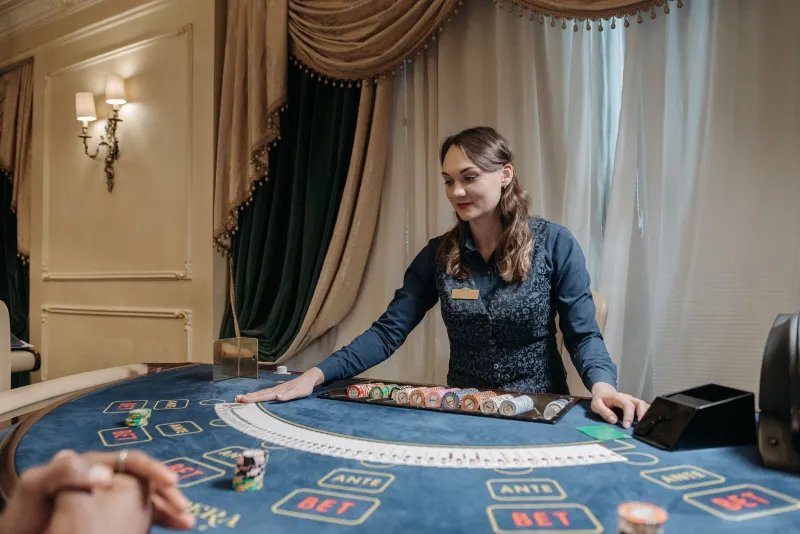
At the tables: A $10 minimum blackjack table gives you roughly 8–12 hands per $100 depending on tips and variance. Play it slowly, tip the dealer, and you can stretch a session well over an hour. Lower-minimum rooms — think regional casinos in Oklahoma, Louisiana, or upstate New York — often run $5 tables where the same bankroll lasts twice as long. Vegas Strip? Expect $15–$25 minimums off-peak, which means your $100 buys you a shorter, sharper show.
At the slots: Penny slots with $0.40–$0.60 per spin give you 150–200 spins on a hundy. That's a solid evening of button-pushing if you're disciplined about denominations. The bonus rounds are your encore moments — sometimes they show up, sometimes they don't.
The extras: A decent chunk of that $100 often comes back in non-cash value. Drinks while you play (yes, still free at most US casinos, tip your server $2–$3 a round), player card points that turn into buffet credit or free play, and the ambient value of a loud, neon, air-conditioned people-watching experience you literally cannot get anywhere else.
Add it up and $100 of casino night stacks up reasonably well against $100 of dinner-and-a-movie for two — which, in most US cities in 2026, doesn't even cover the appetizers anymore.
Why 'Experience Budgeters' Report Having More Fun
Anecdotally — and this shows up over and over in player communities — the people who frame gambling as entertainment spending describe their casino nights more positively, even when they lose. A few reasons why that tracks:
- Losses stop stinging. If the money was pre-spent, losing it isn't a failure of strategy; it's the cost of admission.
- Decisions get looser and better. Ironically, players who aren't emotionally attached to the money often play more relaxed, more disciplined sessions. Tilt comes from needing to win. Fun doesn't need to.
- The session has a natural ending. When the $100 is gone, the night is over — no ATM trips, no "one more buy-in," no 2 a.m. regret spiral.
- Wins become pure bonus. Any session that ends with money in your pocket is a great night instead of an entitlement you were owed.
This is the same logic that makes a $100 concert ticket easy to swallow. You're buying the evening, not the outcome.
A Simple Framework for Your Next Trip
If you want to try the entertainment-budget approach, keep it brutally simple:
- Pick your number before you leave the house. Cash only. Leave the debit card in the glovebox.
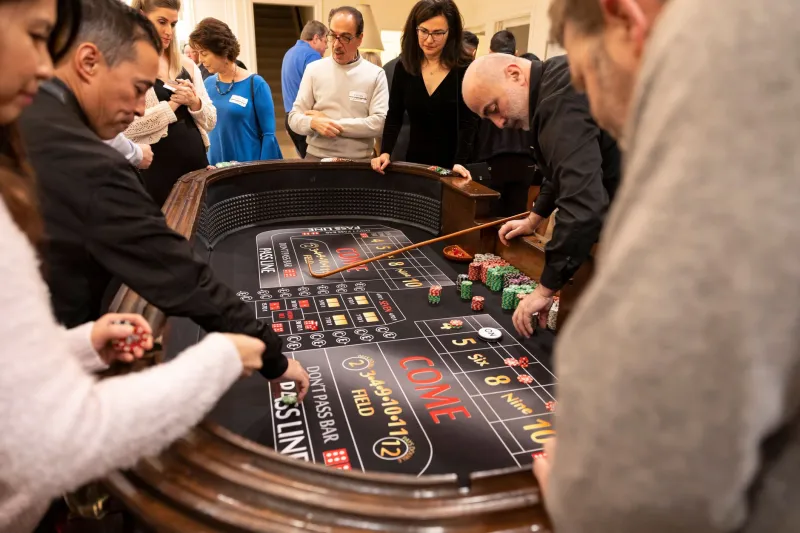
- Split it if the night is long. Two $50 sessions beat one $100 impulse. Walk around between sessions. Get the free drink. Watch the craps table chaos.
- Choose games that match your time budget. Slow games (blackjack at a full table, craps, video poker) stretch entertainment dollars further than high-volatility slots.
- Track the night in memories, not dollars. The dealer who was hilarious, the guy who hit a jackpot two seats down, the waitress who remembered your drink — that's the show you paid for.
The Honest Caveat
This framing works for recreational players, and it's worth saying plainly: if you find yourself unable to stick to a pre-set budget, that's not an entertainment problem — that's a signal worth taking seriously. Every state offers problem gambling helplines (1-800-GAMBLER connects you nationally), and there's zero shame in using them.
But for the vast majority of us who just enjoy the occasional night out, the reframe is powerful. Stop asking the casino to pay for your evening. Buy the ticket, enjoy the show, and let whatever happens at the tables be the plot twist — not the whole story.
Your $100 was never an investment. It was always the price of a good night. Once that clicks, everything about the casino gets lighter.