What Your Player Card Is Really Tracking — And Who It's Really Working For
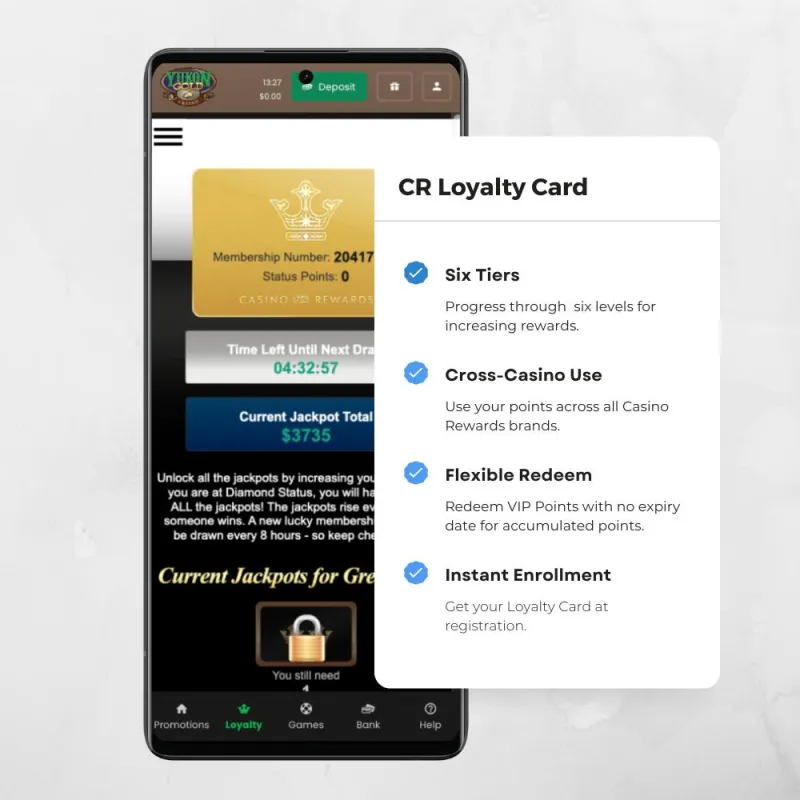
Photo: casino loyalty card player rewards program close up, via images.prismic.io
Walk into almost any casino in the US and within five minutes someone will offer you a player's club card. The pitch is always friendly, always generous-sounding: rack up points, earn free play, get comped on hotel stays. It sounds like the house is giving something back. And in a narrow, technical sense — it is.
But here at 1 Casino Club, we've been digging into how these programs actually work under the hood, and the picture is more complicated than a free steak dinner makes it look.
The Comp Math Nobody Explains at Sign-Up
Let's start with the numbers, because the numbers are where the story really lives.
Most slot-based loyalty programs return somewhere between 0.1% and 0.5% of your total wagers as comp value. That sounds small because it is small. If you run $500 through a slot machine in a single session — which goes faster than most people expect — you might accumulate enough points to cover a $2 buffet credit. Meanwhile, the house edge on that same machine is likely sitting between 5% and 10%, depending on the property and the game.
So you're potentially losing $25 to $50 in expected value to earn back two dollars in comps. The ratio isn't in your favor, and it was never designed to be.
Table game programs are sometimes more generous on paper, but they come with their own complications. Your tracked play is usually calculated based on average bet size and time at the table — estimates the casino controls. If the floor supervisor clocks you at a $15 average when you were actually hovering around $10, your comp accrual looks better than your actual loss rate. That's a subtle psychological trick: it makes you feel like you're earning more than you really are, which encourages you to keep playing.
The Data Side of the Equation
Here's the part that doesn't make it onto the brochure: your player card is also one of the most powerful behavioral data tools a casino has.
Every swipe logs what you played, how long you played, what time of day you showed up, how you responded to promotional offers, and — critically — how your behavior changes when you're winning versus losing. Over time, casinos build detailed profiles of individual players that help them optimize everything from direct mail campaigns to the placement of specific machines on the floor.
Gambling behavior researchers have noted that this kind of personalized data collection allows casinos to identify what's sometimes called a player's "pain point" — the loss threshold at which someone is most likely to leave. Once that's established, targeted offers (a free-play voucher that arrives by text right around the time you'd normally cash out, for example) can be timed to extend sessions at precisely the moment a player is most emotionally vulnerable.
This isn't a conspiracy theory. It's just good marketing applied to an industry where the stakes are unusually high.
How Loyalty Programs Shape Behavior Over Time
One of the most well-documented effects of casino loyalty programs is what researchers sometimes call "status lock-in." Once you've reached a tier — Gold, Platinum, Diamond, whatever the branding is — there's a powerful psychological pull to maintain it. Losing your tier status feels like a loss even if you never derived much concrete value from it in the first place.
This maps directly onto loss aversion, one of the most reliable findings in behavioral economics. We feel the pain of losing something roughly twice as strongly as we feel the pleasure of gaining something equivalent. Casinos didn't invent this quirk of human psychology, but their loyalty program architects understand it extremely well.
The result is that players sometimes make trips they wouldn't otherwise make, or extend sessions they'd otherwise end, purely to protect a status level. When you're gambling to keep a card tier rather than because you're enjoying the experience, the program has done its job — just not for you.
So Is Any Loyalty Program Worth It?
This isn't an argument that all player cards are a scam. For disciplined, recreational gamblers who are going to play anyway, capturing some comp value on that activity is genuinely rational. A free hotel room or a few dollars of free play doesn't change the math of the games, but it does represent real value if you'd have paid for those things regardless.
The framework worth applying is this:
Ask what the program is actually returning. Most major casino chains publish their points-to-cash conversion rates if you look for them. Calculate the realistic comp return on your typical session bankroll and compare it honestly to what you're spending.
Watch for behavior changes. If you notice you're visiting more often than you'd planned, staying longer than you intended, or choosing a particular property specifically because of tier protection — those are signals that the loyalty structure is influencing your decisions more than your own preferences are.
Treat comps as a bonus, not a goal. The moment earning points becomes a motivation for gambling rather than a side benefit of it, the program has flipped from a perk into a subtle trap.
Read the expiration and forfeiture rules. Many programs include clauses that reset or void points after a period of inactivity — which creates yet another reason to keep coming back even when you hadn't planned to.
The Bigger Picture
None of this means you should cut up your rewards card. But it does mean you should look at it the way the casino looks at it — as a business tool, not a gift. The casino knows exactly what it costs them to offer you that free buffet, and they've run the numbers to make sure it's worth their while.
The question is whether you've run the same numbers from your side of the table.
At 1 Casino Club, we think informed players are better players — not because knowing the mechanics makes you win more, but because it helps you stay in control of why you're playing and what you're getting out of it. The loyalty program will always be designed to serve the house first. That doesn't mean you can't use it — it just means you should use it with your eyes open.