Read the Room: The Hidden Social Currents Running Through Every Casino Table
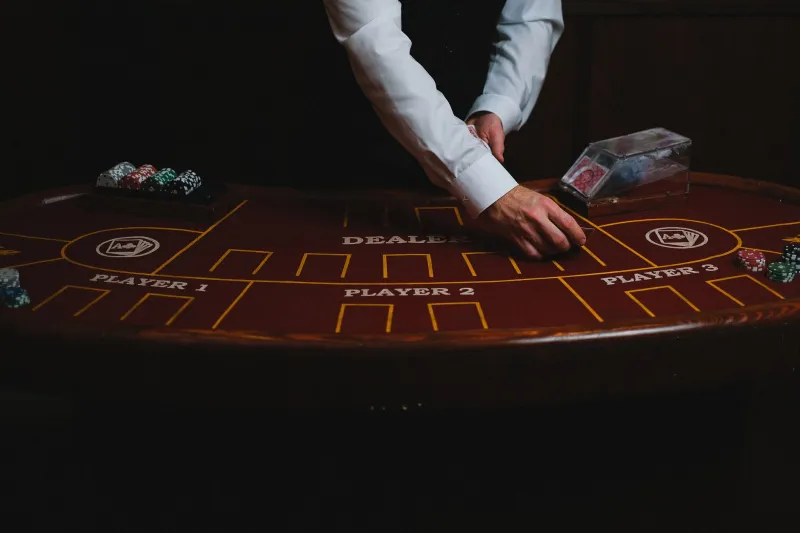
Walk up to any live table in Vegas, Atlantic City, or your local tribal casino and you're stepping into more than a game. You're walking into a running conversation that started before you arrived and will continue long after you color up. And here's the part most players miss: that conversation isn't random. Some of it is genuine human connection. Some of it is quietly working on your brain to keep chips moving.
If you've ever wondered why you suddenly tipped harder, stayed longer, or felt weird about leaving after a dealer change — this one's for you.
The Dealer Change That Breaks Your Streak (Or Does It?)
Every craps or blackjack player knows the ritual. The pit boss calls for a new dealer, the outgoing one taps the table, and someone inevitably mutters, "There goes my luck."
Here's the neutral truth: the shuffle doesn't care who's dealing. The cards have no memory of personalities. But you might. A dealer change resets your rhythm — you've been locking into a pace, a betting pattern, a conversational groove. When that groove breaks, two things happen: you either snap out of autopilot (good) or you feel a psychological itch to "win it back" from the new dealer (bad).
Community players on our forums describe it constantly: the session was fine until the swap, and suddenly the bets got bigger. That's not the cards. That's your brain reacting to a disrupted routine and labeling it as a losing streak before a single hand is dealt.
The play: treat every dealer change as a free mental checkpoint. Ask yourself if you'd make your next bet at this size if you'd just sat down. If the answer's no, downshift.
Friendly Noise vs. the Upsell Machine
Not all table chatter is created equal. Let's sort it into buckets.
Genuine banter: Dealers reminiscing about a crazy shift, players ribbing each other over a bad hit, the whole table groaning in unison when the dealer pulls a 20. This is the good stuff — it's why live tables beat screens, and there's nothing wrong with enjoying it.
The subtle upsell: Now the savvier stuff. "You've been playing great, you should jump to the high-limit room." "One more hand, you're due." "The side bet's been hitting all night." Dealers and floor staff are trained to be warm — that's hospitality, and most of them genuinely enjoy the interaction. But warmth also keeps seats filled and action moving. When a suggestion nudges you toward higher stakes, bigger bets, or side wagers with worse house edges, that's friendliness wearing a marketing hat.
The hot table rumor: This one pulls crowds like nothing else. Somebody wins big at a blackjack table near the buffet, and within twenty minutes there's a crowd three-deep whispering that the table is "paying." Guess what? That table's math hasn't changed by a decimal point. What has changed is the energy — and energy is contagious. A loud, winning table makes the game feel more winnable, which loosens wallets across the pit.
Why Your Brain Buys It
There's a reason this stuff works. Humans are wired to mirror the emotional temperature of a room — it's called emotional contagion, and casinos are practically laboratories for it. A cheering table raises your arousal level, and aroused brains take bigger risks. Meanwhile, a friendly dealer creates a light social obligation: it's genuinely harder to walk away from someone who's been kind to you for forty-five minutes.
None of this requires anyone to be manipulative. The effect emerges naturally from the environment. But understanding it puts you back in the driver's seat.
How Community-Savvy Players Read the Room
This is where being part of a player community pays off — literally. Regulars compare notes on the social side of the game, and a few patterns come up again and again:
- Track your own tells, not just the table's. Notice when you start betting bigger after banter picks up. That correlation is your leak.
- Enjoy the conversation, budget around it. There's nothing wrong with playing for the social experience. Just decide what that experience costs before you sit down, the same way you'd budget for a concert ticket.
- Beware the crowd magnet. If you're joining a table because it's loud and winning, you're chasing vibes, not value. Fun? Sure. Expected edge? Unchanged.
- Tip with intention. Tipping because you want to is great. Tipping because the rhythm of the table guilt-trips you into it, hand after hand, is a bankroll drain disguised as etiquette.
The Bottom Line
The table talk economy is real: chatter, charm, and crowd energy are part of the product you're buying when you sit down. There's no villain here — dealers are professionals doing a hospitality job, and most players genuinely enjoy the social layer. The trap isn't the conversation itself. It's letting someone else's rhythm, energy, or suggestion quietly write your betting decisions for you.
Read the room. Enjoy the room. Just don't let the room place your bets.