Hot Machines, Cold Machines, and the RNG Truth That Changes Everything
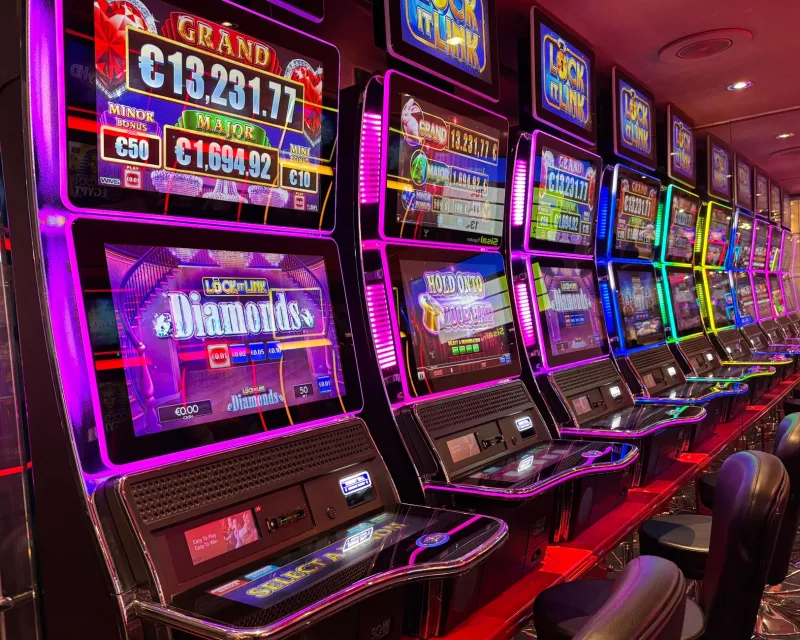
Walk through any casino floor in Vegas, Atlantic City, or your local tribal gaming spot and you'll hear it. Someone swears the corner machine is "due." Another player just abandoned a slot after fifty losing spins, convinced they've warmed it up for the next person. A third is hovering, waiting for the right "moment" to sit down.
These beliefs feel logical. They feel earned, even — built from hours of personal observation and shared casino wisdom. But they're based on a fundamental misunderstanding of how modern slot machines actually generate outcomes. And once you get what's really going on under the hood, the whole game looks different.
What an RNG Actually Does (In Plain English)
Every modern slot machine — whether it's a physical cabinet at a brick-and-mortar casino or a digital game at an online platform — runs on a Random Number Generator. The RNG is a software algorithm that produces thousands of number sequences every single second, continuously, whether anyone is playing the machine or not.
When you hit that spin button, you're not triggering a spin so much as you're sampling the RNG at that exact millisecond. The number the algorithm happens to be on at that precise instant gets translated into the symbol combination you see on the reels. The reels themselves — the spinning graphics — are essentially a visual presentation of a result that was already determined the moment your finger made contact.
That's the key thing to internalize: the outcome is decided at the moment of the spin, not during it. The animation is theater.
Why "Due" Machines Don't Exist
The most persistent myth in slot play is the idea that a machine that hasn't paid out in a while is "due" for a win. This is called the gambler's fallacy, and it's a cognitive trap that affects even experienced players.
Here's why it doesn't hold up: each spin is an independent event. The RNG has no memory. It doesn't know you've lost fourteen times in a row. It doesn't know the last jackpot was paid out three hours ago or three weeks ago. Every single spin starts from zero, statistically speaking.
Think of it like flipping a fair coin. If you flip heads ten times in a row, the odds of the next flip being heads are still exactly 50%. The coin doesn't "owe" you a tails. Slot machines work the same way — at a much more complex scale, but with the same underlying principle.
The Real Numbers: What Payout Rates Actually Tell You
Slot machines are programmed with a Return to Player (RTP) percentage. A machine with a 94% RTP will, over a statistically significant number of spins (we're talking millions), return $94 for every $100 wagered. That remaining 6% is the house edge.
But here's what that number doesn't mean: it doesn't mean you'll get $94 back if you put in $100. RTP is calculated across the entire lifetime of the machine's play data. In any given session, you might win big, lose everything, or land somewhere in between. The math only evens out at a scale no individual player will ever personally reach.
In regulated US markets, most slot RTPs fall between 85% and 98%, with video poker and some penny slots sitting at opposite ends of that range. Casinos are required to disclose these figures in certain states, and a few jurisdictions like Nevada publish aggregate payout data by region. It's worth looking up the numbers for wherever you're playing — that information actually does tell you something useful.
Near-Misses: The Feature That Messes With Your Head
If you've ever had two jackpot symbols land and then watched the third reel stop just one position short, you know the gut punch of a near-miss. It feels like you almost won. It feels like you're close. It feels like you should keep going.
None of that is real — but the feeling is by design.
Research in behavioral psychology has consistently shown that near-misses activate the same reward pathways in the brain as actual wins. Your dopamine response doesn't cleanly distinguish between "I won" and "I almost won." The near-miss creates urgency, a sense of momentum, a reason to stay seated.
What makes this especially interesting is that near-misses are not random accidents. Gaming regulators in the US allow slot manufacturers to weight the reels in ways that increase the frequency of near-miss outcomes above what pure chance would produce. The machine is, in a very real sense, engineered to feel like you're perpetually on the edge of something.
Knowing this doesn't make the feeling go away — that's the frustrating part. But it does give you a framework to recognize what's happening when that pull to "just try one more time" kicks in after a near-miss.
Timing the Machine: Does It Matter When You Play?
Some players swear by playing during off-peak hours, believing casinos loosen machines when foot traffic is low to attract players. Others think busy weekend floors have better payouts because of higher volume. Neither theory holds water.
In regulated US markets, casino operators cannot legally adjust RTP on the fly in response to traffic or time of day. Changes to a machine's programming require physical access, documentation, and in many cases regulatory notification. It's not a dial someone's turning in a back office based on how crowded the floor is.
The exception worth noting: some jurisdictions do allow different RTP configurations across machine denominations. Higher-denomination machines — dollar slots versus penny slots — often carry better RTPs. That's a real, verifiable difference. Time of day is not.
So What Can You Actually Control?
Here's where the conversation gets practical. If outcomes are random and the machine has no memory, what levers does a player actually have?
Game selection matters. Choosing machines with publicly available higher RTPs, or playing video poker where skill affects outcome, gives you a genuine edge over pure luck-based slots.
Bet sizing relative to your bankroll matters. Flat-betting at a level that lets you absorb variance without busting out quickly gives you more spins, more entertainment value, and more exposure to potential positive swings.
Bonus features matter. Slots with free spin rounds, multipliers, and bonus games can shift the effective RTP during those features. Understanding how a game's bonus mechanics work before you sit down is actually useful research.
Your mental state matters. Chasing losses, playing while tired, or increasing bets after a losing streak are all behaviors that compound the house edge. The RNG doesn't care how frustrated you are — but your decision-making absolutely suffers when emotions are running hot.
The slot machine isn't your ally or your enemy. It's a math engine wrapped in lights and sound. Once you see it that way, you can stop trying to outsmart it and start making smarter choices about how you engage with it.