Same Payout Percentage, Wildly Different Results: The Variance Factor Slots Players Keep Ignoring
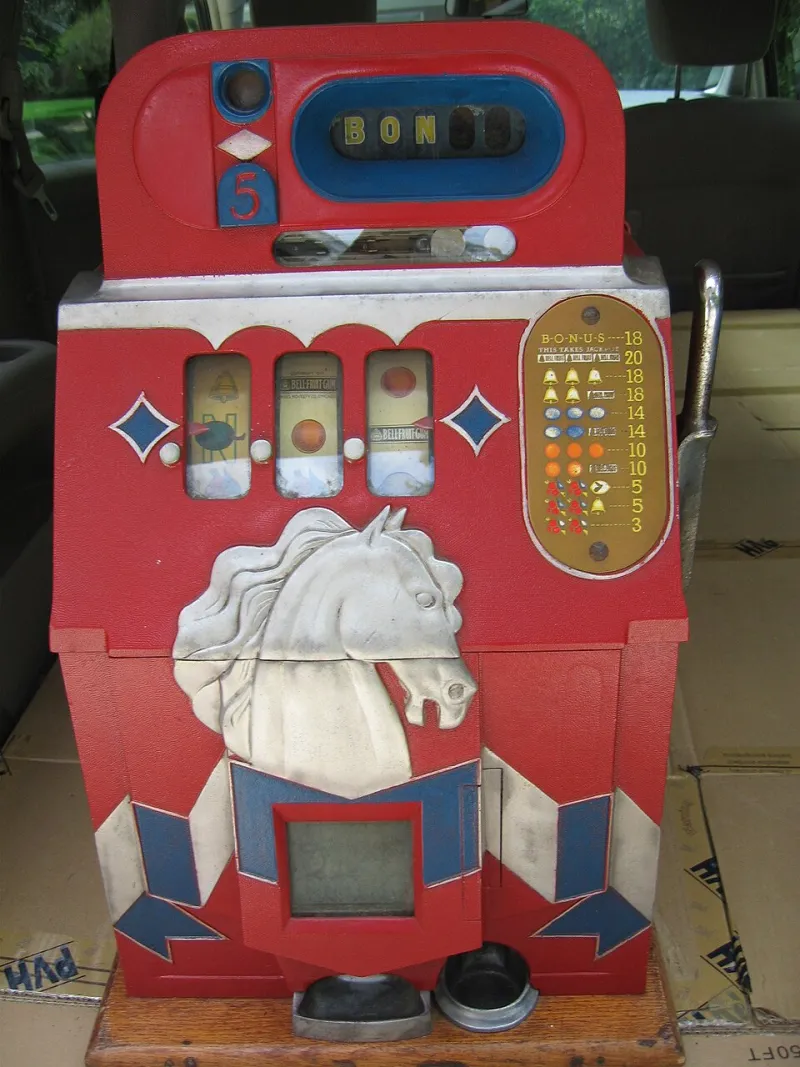
Photo: Gameroom Show, https://www.gameroomshow.com/faq/#Copyright, CC BY-SA 4.0, via Wikimedia Commons
Walk into any casino in the US — a tribal property in Oklahoma, a commercial floor in Las Vegas, a slots parlor in Pennsylvania — and you'll find machines proudly advertising their return-to-player percentages. "Up to 96% RTP!" the marketing reads. Players see that number and treat it like a promise.
It isn't.
RTP tells you what a machine returns over millions of spins. It says almost nothing about what happens during your session. And the metric that actually governs your real-world experience — variance — is rarely advertised at all.
At 1 Casino Club, we think that's a problem worth fixing. So let's break it down plainly.
What RTP Actually Means (And What It Doesn't)
Return-to-player is a theoretical percentage calculated across an enormous sample size — we're talking tens of millions of spins. A machine with 95% RTP will, in theory, return $95 for every $100 wagered over its lifetime.
For a single player sitting down with $200 on a Tuesday afternoon? That number is almost meaningless. You're not playing millions of spins. You're playing maybe a few hundred. The law of large numbers hasn't kicked in, and it won't during your visit.
What actually determines whether you're still spinning an hour from now — or broke in twenty minutes — is variance.
Variance 101: The Spectrum from Smooth to Savage
Variance (sometimes called volatility) describes how a machine distributes its payouts. Think of it as the shape of the ride rather than the destination.
Low-variance machines pay out frequently but in smaller amounts. You'll hit something regularly — small wins, coin-in returns, modest bonuses — which keeps your balance relatively stable. These machines are the casino equivalent of a calm drive through flat country. You're not going anywhere fast, but you're not flying off a cliff either.
Medium-variance machines sit in the middle. You'll have dry spells, but wins come often enough to keep things interesting, and occasional bigger hits give you a real shot at profit. Most of the branded video slots you see on major floors — the ones tied to TV shows or movies — fall somewhere in this range.
High-variance machines are a different animal entirely. Long cold stretches where almost nothing happens. Then, suddenly, a massive hit. These machines can be brutal on a limited bankroll because the gap between payouts can swallow your entire session budget before the big win ever materializes. But when they do hit, the payouts can be life-changing.
Two Machines, Same RTP, Opposite Experiences
Here's a concrete example to make this tangible.
Imagine two penny slots, both rated at 94% RTP. Machine A is low-variance. Machine B is high-variance. You sit down at each with $100 and play $1 per spin.
On Machine A, you hit small wins constantly — $0.50 here, $1.20 there, a $5 scatter pay. Your balance dips and rises but stays in a workable range. After an hour, you've had a decent time and might still have $70 or $80 left.
On Machine B, you spin and spin and spin with almost nothing coming back. Your $100 is at $40 before you've even triggered a bonus. Then — if you're lucky — the bonus hits and pays $120. Net positive. But if that bonus doesn't hit in time? You're busted and walking away with nothing, even though the machine's theoretical return was identical to the one that kept you entertained for an hour.
Same RTP. Completely different session.
Why This Matters for Your Bankroll
The practical implications here are significant, and they're directly tied to how much money you bring to the floor.
If you're working with a modest session budget — say, $100 to $200 — high-variance machines are genuinely risky. The math isn't in your favor to survive long enough to hit the kind of pay that justifies the dry spells. You need a deeper bankroll to ride out the variance.
A rough rule of thumb used by experienced slot players: for high-variance machines, your session budget should cover at least 200 to 300 spins at your chosen bet level without a significant win. At $1 per spin, that's $200 to $300 just to have a reasonable shot at reaching the machine's pay events.
For low-variance machines, your money goes further per unit of time, which makes them better suited for players who want extended play, comp accumulation, or just a longer night out.
How to Spot Variance Before You Sit Down
This is where it gets practical. Casinos don't post variance ratings on the machine — not in the US, anyway. So how do you figure out what you're dealing with?
Check the pay table. High-variance machines typically feature a few massive top jackpot prizes with relatively empty middle tiers. If the gap between the top prize and the next-best payout is enormous, that's a volatility signal. Low-variance machines tend to have flatter pay tables with more gradations of winning combinations.
Look at the bonus frequency. If a machine's marketing emphasizes a massive jackpot but the bonus feature triggers rarely, you're looking at high variance. Machines that advertise frequent free spins or "bonus every X spins" are generally lower variance.
Use third-party databases. Sites that catalog slot specs — game developers like IGT, Aristocrat, and Konami often publish volatility ratings in their technical documentation. Player communities (including our own forums here at 1 Casino Club) frequently compile this data and share it.
Ask the floor staff. This sounds almost too simple, but casino hosts and slot attendants often know their floor well. Phrasing it as "which machines have the bigger swings?" usually gets you a useful answer.
Matching Your Personality to the Right Machine
Beyond bankroll, there's a psychological fit question worth asking yourself.
Are you someone who needs action to stay engaged? Do long cold streaks make you anxious or impulsive? Low to medium variance is probably your comfort zone. The frequent feedback keeps you grounded and rational.
Are you chasing a big score and genuinely okay with the possibility of busting out? Do you have the discipline to walk away if the session turns south without doubling down? High-variance machines might align with your goals — as long as your bankroll is sized appropriately.
The worst outcome is a mismatch: a small bankroll on a high-variance machine, played by someone who tilts badly during cold streaks. That's how a $150 budget disappears in 25 minutes and leaves you feeling cheated, even though the machine was performing exactly as designed.
The Takeaway
RTP is a marketing number. Variance is the reality of your session.
Before you sit down at any slot machine, take thirty seconds to assess what you're actually dealing with. Look at the pay table. Consider your budget. Think about how you handle losing streaks. Then choose accordingly.
The players who consistently get the most out of their time on the floor aren't necessarily the luckiest — they're the ones who understand the game they're actually playing.