First Time on the Floor? The Etiquette Rules Every Veteran Wishes You Knew
Walk into any casino in Vegas, Atlantic City, or your local tribal gaming floor, and you'll notice something right away: there's no sign explaining how any of this works socially. The games have printed rules. The etiquette? You're expected to just absorb it.
Most people learn the hard way — a wrong bet placed at the wrong moment, a phone out at a blackjack table, a hand hovering over someone else's chips. To save you from that, we asked around the 1 Casino Club community and put together the unwritten rules that regulars live by.
Joining a Game Mid-Shoe: Yes, But Read the Room First
One of the most common first-timer questions: can you sit down at blackjack in the middle of a shoe? The answer is yes — you're allowed to jump in at almost any point. But at a full table of players deep into a run, sliding in mid-shoe can shift the flow, and some players take that personally even though the math says it barely matters.
The polite play is simple. Wait for the end of a hand, ask the dealer "Mind if I jump in?" and let the table acknowledge you. If you get a lukewarm reception, no harm done — find another seat. There's always another table.
What you should never do is join and then immediately start telling players how to play their hands. That's the fastest way to become the least popular person in the building.
Your Phone Is Not Welcome at the Table
This one isn't really unwritten — most casinos have it in writing — but new players get flagged for it constantly. If you're seated at a table game, the phone goes away. Dealers don't want to see it, and security definitely doesn't want you filming or texting mid-hand.
Need to take a call? Step away from the table, finish your conversation, and come back. Nobody will hold your seat hostage, but the dealer will absolutely pause the game if you're trying to check a fantasy football score while holding a 16 against a dealer 10.
Never Touch Another Player's Chips — Or Your Own in Certain Spots
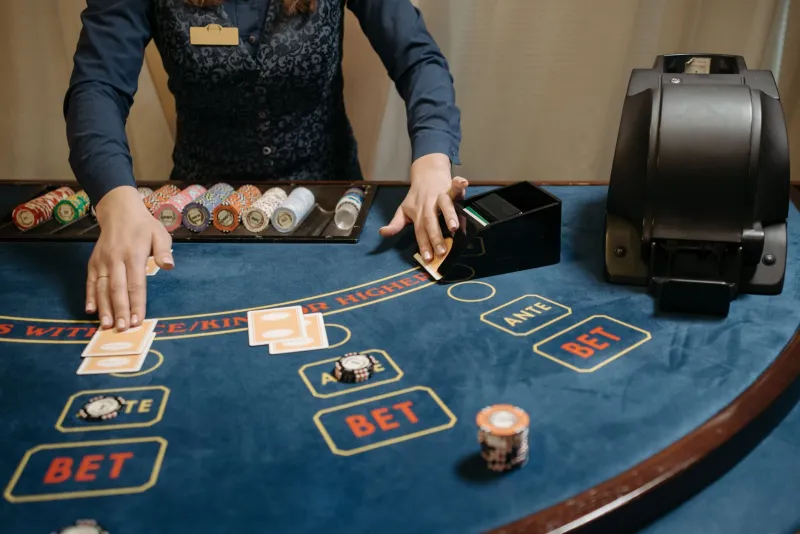
This is the big one, and it's where casinos get genuinely strict. Chips on the felt in a betting circle are off-limits once the hand begins. Don't touch your own bet after the cards are dealt, don't touch your winnings until the dealer pushes them toward you, and under no circumstances reach into another player's area for any reason.
If a dealer has to call the floor over because a hand crossed into someone else's chips, it's not a social faux pas — it's a potential security review. Cameras cover every angle, and the safest interpretation of any ambiguous hand is that it shouldn't be there.
Tipping: Not Required, But the Floor Runs On It
Cocktail servers work for tips. The standard in most US casinos is $1 to $2 per drink, and rounding up if you're on a good run. If you're getting free drinks on a hot streak, tipping a little extra is both a nice gesture and good karma — the servers remember generous players, and the drinks come back faster.
Dealers are the same. You don't have to tip, and no one will treat you differently if you don't, but a toke for the dealer after a decent win is standard practice. Many players bet a small amount for the dealer on certain hands — if you see a red chip in the betting circle with a "dealer" or a ring marker on it, that's what's happening. Feel free to ask; dealers are generally happy to explain it.
The Craps Table Has Its Own Civilization
If blackjack etiquette is a set of guidelines, craps etiquette is a legal code. The golden rules: never say the word "seven" at the table (regulars will genuinely bristle), handle dice with one hand, and don't toss them off the back wall like you're throwing darts.
Also, don't reach across the table to place your own bets. That's the dealer's job — put your money in the come-out zone, announce your bet, and let them set it. First-timers reach over the rail constantly and get corrected immediately.
Slots and Video Poker: The Loose Rules That Still Matter
Machines are more forgiving territory, but a few norms hold. If someone's playing a bank of machines or has a coat draped over the neighboring seat, that seat's claimed — move on. If a player steps away from a machine briefly, don't slide in assuming it's abandoned; slot attendants can usually tell you if it's been left.
And never, ever sit down at a machine someone's actively playing, even if they're just standing there watching a bonus round. That's their money on the screen.
Handle Losing (and Winning) Like an Adult
Nobody's asking you to celebrate a losing session. But slamming cards, berating dealers, or loudly blaming the table for your bad decisions marks you instantly. The same goes for the flip side — gloating over big wins at a table full of people who just lost gets old fast.
The regulars who are welcome everywhere tend to be the ones who treat wins and losses with the same even keel. It's not about suppressing emotion; it's about remembering there are a dozen people at that table sharing the experience with you.
The Meta-Rule: Ask Before You Assume
Here's the thing that ties all of this together: dealers, floor staff, and most experienced players will happily walk a newcomer through the customs — if you ask. The rookie mistakes that actually annoy people are the ones made with confidence, not curiosity.
So sit down, say it's your first time, and ask the dealer how they run the table. You'll get a warmer reception than you'd expect, and you'll skip the trial-and-error that the rest of us paid for. That's what a community is for.