Talk the Talk: A Newcomer's Field Guide to Dealer Lingo Before You Hit the Tables
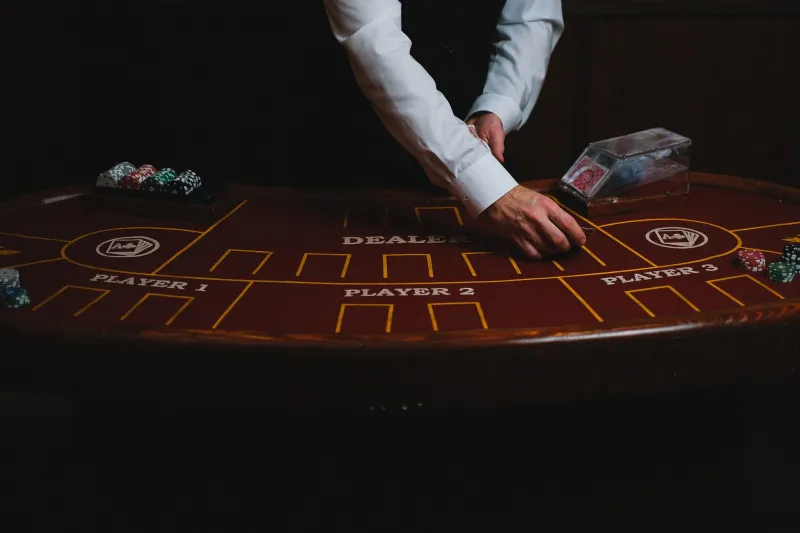
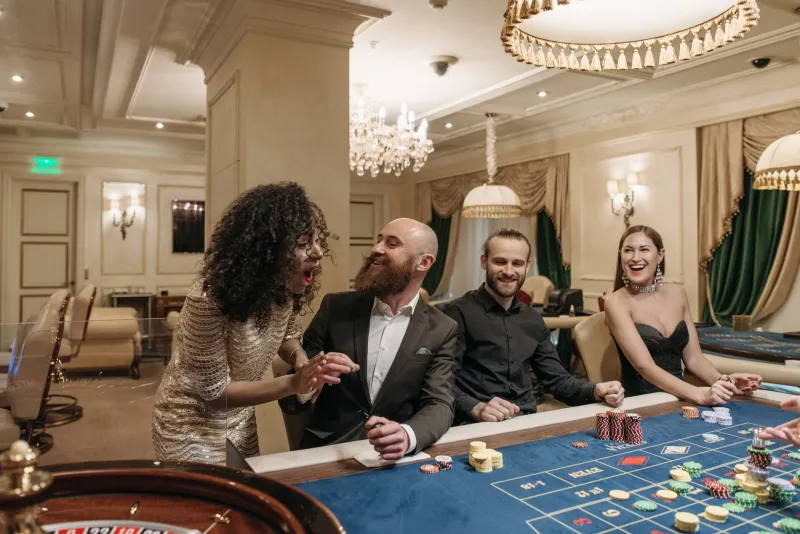
You slide into a seat at a $10 blackjack table in Las Vegas, stack your twenty-dollar bills on the felt, and the dealer immediately barks something to the pit: "Cheques coming in!" A few hands later, the pit boss strolls over, glances at the tray, and mutters "rack's getting light." Meanwhile, a player across from you asks to "color up," and the dealer nods like that's a perfectly normal sentence.
Welcome to casino English. It's not designed to exclude you — it evolved for speed and precision on a loud, busy floor. But if you've never heard it, it can make your first real table experience feel like showing up to a family dinner where everyone shares an inside joke. Let's fix that.
Why Dealers Talk Like That in the First Place
Before we run through the glossary, it helps to know the why. Casino lingo exists mostly for three reasons:
- Speed. "Action" is faster than "the total amount being wagered on this game right now."
- Clarity over noise. A pit boss across a crowded pit can't hear whispers. Short, distinctive words cut through.
- Surveillance-friendly precision. Vague language creates disputes. Specific phrases create a record.
That's it. No secret handshake. Once you internalize that, the whole floor stops feeling like a mystery box.
The Core Vocabulary Every Table Player Should Know
"Coloring Up"
When a player asks to color up, they're exchanging a pile of smaller chips for larger denominations — say, twenty red $5 chips for four black $100 chips. It's a courtesy to the dealer (who won't have to count it all at the end of your session) and a signal to the pit that you're leaving or cashing out soon.
What it signals: The player is wrapping up. If you're tracking table energy, a wave of coloring up usually means a session is breaking.
"Action"
The lifeblood of the casino. "Action" refers to the total amount wagered — either on a specific game, by a specific player, or across the pit. A dealer might call "action coming" when a high roller sits down. A host might describe a guest as "good action" meaning they bet big and often.
What it signals: If the staff suddenly perks up when someone joins your table, that person is moving serious money.
"In the Rack"
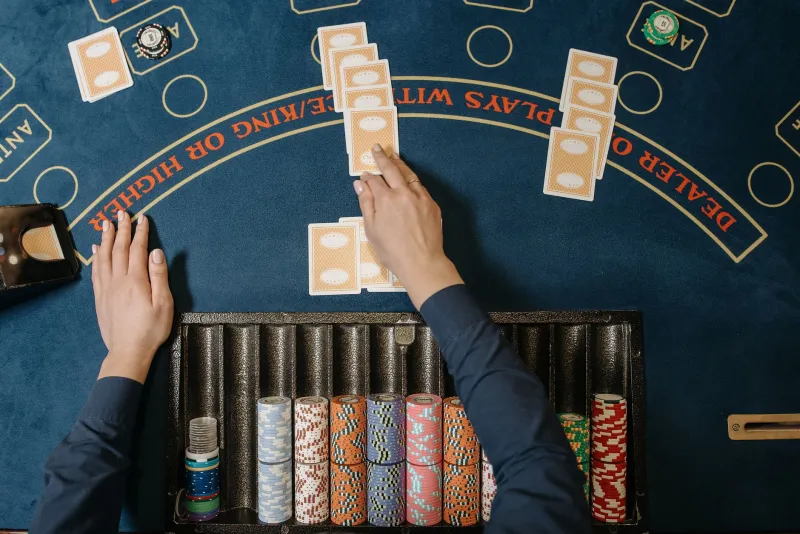
The rack is the chip tray built into the table in front of the dealer. When a dealer says the rack is "light," they're low on chips — often because the table is winning a lot (yes, the players are beating the house on this one). "Heavy" or "full" racks mean the opposite.
What it signals: A light rack is one of the few visible clues about how a table has been running. Observant players notice. The pit boss definitely does.
"Cheques" (Not Checks)
Inside the industry, chips are called cheques — spelled the British way, a holdover from the game's European roots. "Cheques coming in" means a buy-in is happening. You'll never hear a dealer say "chips" on the floor, and now you'll know why.
"Marker"
A marker is a line of credit extended to a player — essentially a counter check the casino will cash against your established credit line. When someone "plays on a marker," they're borrowing from the casino, not the ATM. It's a big-player thing, and hearing it means someone at your table has a relationship with the cage worth six figures or more.
"Toke"
A toke is a tip. Dealers pool their tokes in most US casinos, so when you make a bet for the dealer or slide a chip their way after a nice run, you're toking. Some players announce it — "one for the dealer" — which is both a tip and a small social gesture the whole table understands.
"Cold" and "Streaky" Table Talk
You'll hear players (and sometimes dealers) describe tables as hot or cold. Here's the neutral truth from the 1 Casino Club community: mathematically, streaks are just variance. But the language matters culturally — calling a table cold is the socially accepted way to say "I'm going to go find another seat" without insulting anyone.
Pit Boss Phrases That Actually Mean Something
The floor supervisors have their own layer of jargon, and a lot of it is directed at each other, not at you:
- "Watch the game" — A supervisor is being told to monitor a table, often because play looks unusual or a large bet just landed. It's routine, not an accusation.
- "Rate him" — The pit is being asked to log a player's average bet and session length so the comps system can score them. If you want to be rated, ask for it — it's how loyalty club math starts working in your favor.
- "Fill" — When the rack runs light, a fill brings more cheques from the cage, delivered in a locked box with a whole verification ritual. Watching a fill is a mini ceremony: two people, a count, signatures, the works.
- "Heat" — Slang for attention from casino staff, usually toward a player doing something that looks like advantage play. If someone whispers "you're getting heat," it's friendly advice to dial it back or move along.
How to Use This Without Overreaching
Here's the etiquette angle, because it matters: knowing the lingo doesn't mean performing it. Nothing screams trying-too-hard like a first-timer aggressively calling for fills. The move is simple — listen more than you talk, ask the dealer to clarify anything you don't understand (they genuinely don't mind), and use phrases like "color me up" when they're actually appropriate.
Dealers can spot a rookie who's done their homework versus one who hasn't, and the homework-doers get a warmer table every time. You don't need to sound like a twenty-year veteran. You just need to not be lost.
The Real Payoff
Casino slang is culture, and culture is what separates a night of feeling like an outsider from a night of feeling like you belong at the table. Learn a dozen terms, use two or three naturally, and suddenly the floor reads like a book instead of static.
And if you pick up more along the way — from dealers, from regulars, from a late-night session in Reno — that's exactly what our forums here at 1 Casino Club are for. Bring your favorite phrase you overheard and couldn't decode. Somebody in the community has already heard it.